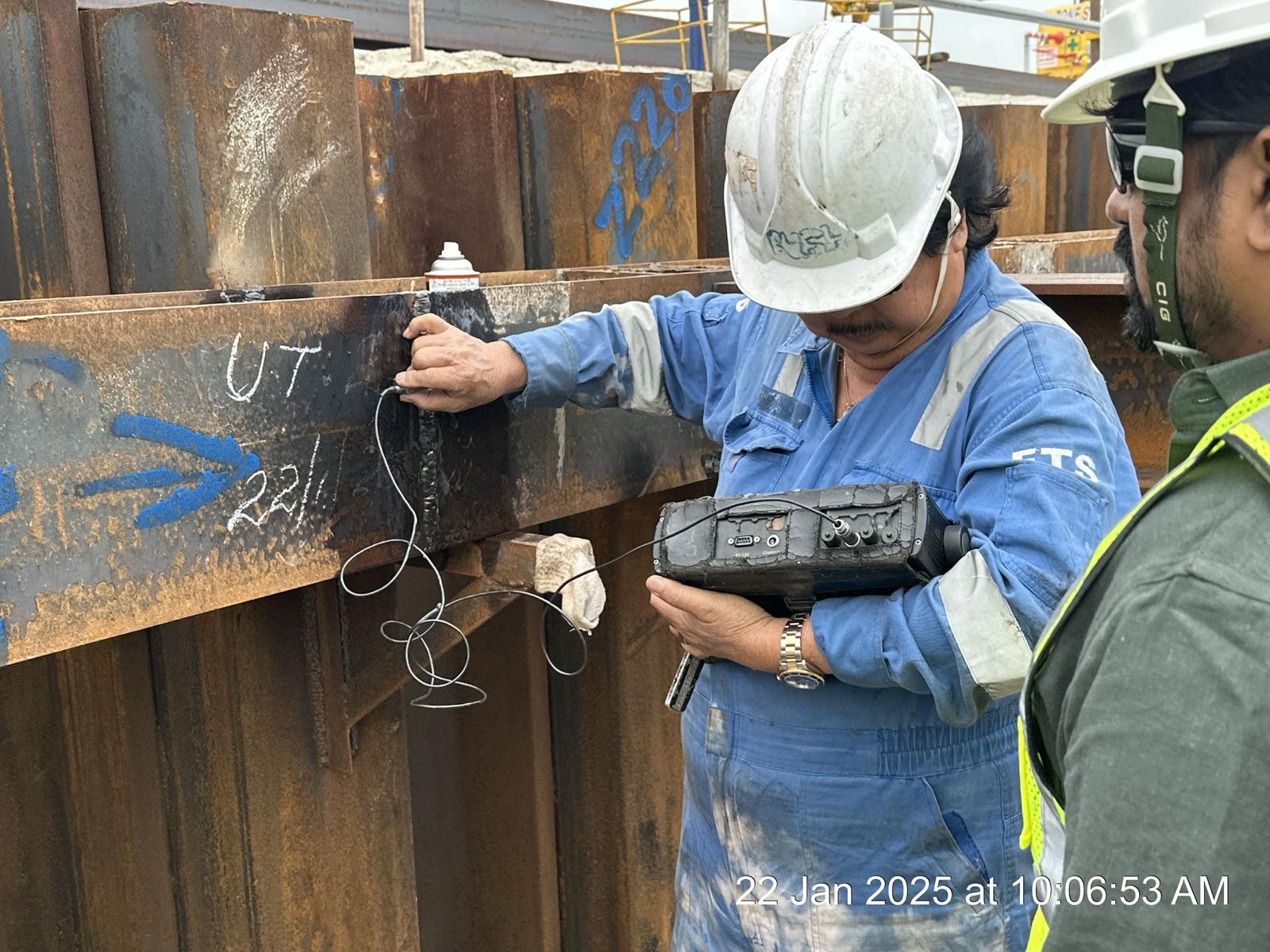
Welded joints carry the load in struts, walers, pile splices, and brackets. A defect that cannot be seen can still lead to failure, which is why non-destructive testing (NDT) matters.
MPI: Magnetic Particle Inspection
MPI finds surface and near-surface cracks in magnetic steel. A magnetic field is applied, and fine particles gather at any discontinuity, making it visible. It is quick and well suited to checking weld toes and edges.
UT: Ultrasonic Testing
UT sends sound waves into the steel. Reflections reveal internal flaws such as lack of fusion or porosity that never reach the surface.
Why use both
They find different things. MPI is strong on surface cracking, and UT looks inside the weld. Together they give a much fuller picture of weld quality.
Why it matters on site
- Failed connections in temporary works can be dangerous and costly
- Defects found early are cheaper to repair than defects found after installation
- Test records support quality documentation and client requirements
- Good results build confidence for everyone on the project
Do it right
Testing should follow approved procedures and applicable standards, and be carried out by suitably qualified personnel. Repairs should be re-tested.
Because we weld and fabricate in-house, we can combine welding and inspection under one contractor.