What Is ERSS and Why Does It Matter?
If you work in construction in Singapore, you will hear “ERSS” often. It sounds technical, but the idea is simple, and it matters a great deal for safety, cost, and compliance.
What does ERSS stand for?
ERSS stands for Earth Retaining and Stabilising Structures. The term was previously Temporary Earth Retaining Structures (TERS). BCA describes an earth retaining structure broadly as any structure, structural system or other means used to maintain the shape of an excavation during construction, earth filling or cutting.
In plain terms, ERSS is whatever holds the ground back so that you can dig safely.
Why do excavations need support?
When you dig down, the soil and groundwater around the hole push inward. Without support, walls can move, the ground can settle, and in the worst cases the excavation can collapse. That can endanger workers, damage neighbouring buildings and underground utilities, and halt your project.
What does an ERSS look like?
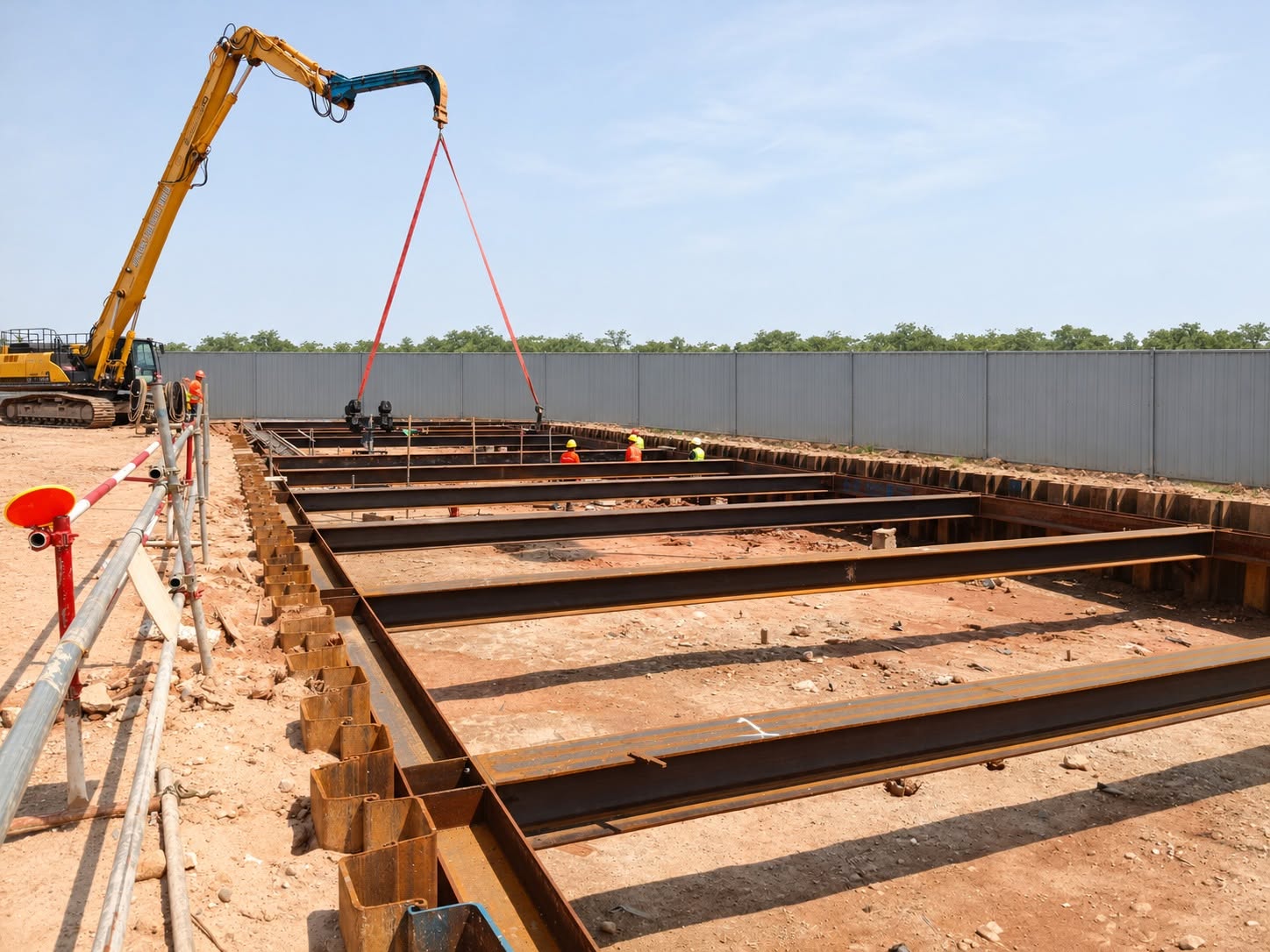
An ERSS is usually a system of several parts working together:
- Retaining wall: sheet piles, soldier piles with steel plates (lagging), or similar elements that hold back the soil
- Support system: struts and walers that brace the wall as the excavation deepens, or other support such as anchors
- Decking and access: temporary platforms for vehicles, plant and people over the excavation
- Utility support: bracing and protection for existing services that cross the excavation
- Monitoring instruments: devices that track wall movement, ground settlement and loads
The right combination depends on the ground, depth, groundwater, nearby buildings and noise and vibration limits.
Why does ERSS matter?
1. Safety. Excavation collapses are among the most serious hazards in construction. A well-designed and well-built ERSS protects people on and around the site.
2. Protecting neighbours and services. Ground movement can crack buildings, damage roads, and rupture pipes and cables. Good ERSS design and monitoring keep movement within limits.
3. Regulatory compliance. ERSS is regulated in Singapore. BCA’s requirements include that plan approval is required for ERSS, and a permit is needed to commence work. The regulatory framework itself has its roots in the 2004 Nicoll Highway collapse, after which regulatory requirements on ERSS and tunnelling works began to develop. byissmge
4. Cost and programme. Poorly planned temporary works lead to redesign, delays, variations and rework. A buildable ERSS, planned early, saves time and money.
5. Evolving standards. BCA continues to refine its guidance. For example, it has issued a circular on managing the risks of utility gaps within ERSS and a guideline on ensuring the integrity of interlocked sheet pile walls to prevent ground loss. Project teams need to stay up to date.
Who is involved?
- Developer/owner: appoints the project team
- Qualified Person (QP): designs the ERSS and makes the submission
- Accredited Checker (AC): independently checks the design where required
- ERSS Contractor: installs, supports, monitors and later removes the ERSS
- Instrumentation contractor: supplies and monitors instruments
Everyone’s role matters. A strong design only works if it is built to the approved drawings and sequence, and monitored throughout.
What should you do before starting?
- Get adequate site investigation and utility information
- Appoint a competent QP, and where required an AC
- Involve your ERSS contractor early for buildability input
- Confirm submission and permit requirements with your QP
- Plan monitoring, trigger levels and response actions
- Make sure methods, materials and workmanship follow the approved design
How Uni-Zone Structural can help
We provide sheet piling (vibro and silent), soldier pile and steel plate works, strutting, decking, augering, utility support, welding, MPI and UT testing, and site/in-house fabrication. We work closely with project teams so the ERSS is safe, buildable, and delivered on schedule.
Planning an excavation in Singapore? Contact us with your site details, and we will help you find a practical, safe solution.