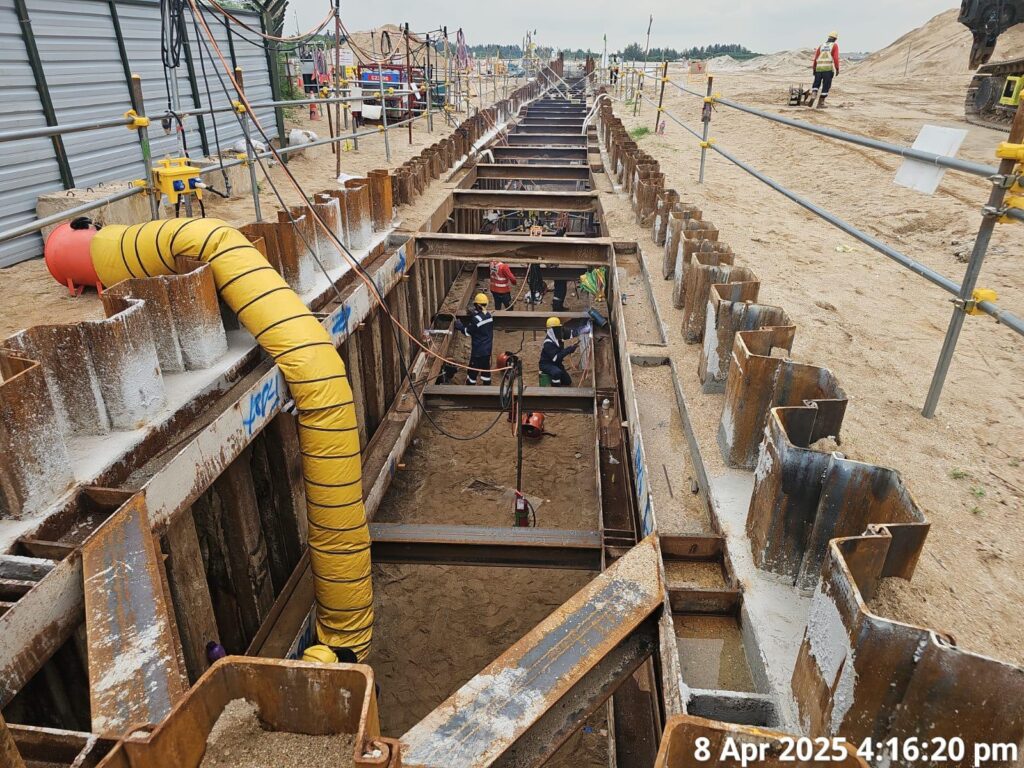
ERSS, or Earth Retaining and Stabilizing Structures, are essential for construction projects involving excavation, particularly during basement construction or when earth is being cut or filled. These structures are designed to maintain the stability of the ground during construction, preventing collapses or damage to adjacent buildings or infrastructure.
Key aspects of ERSS work:
- Design and Construction:ERSS designs involve calculations to ensure the stability of the soil, considering factors like soil type, depth of excavation, and the loads imposed by the structure.
- Types of ERSS:Various methods are used, including sheet piling, strutting, diaphragm walls, and secant pile walls, each with its own strengths and weaknesses depending on the specific project requirements.
- Submission Requirements:ERSS works are subject to approval from the Building and Construction Authority (BCA), requiring submission of plans and details for review.
- Impact on Adjacent Buildings:ERSS works can affect adjacent structures through settlement and ground vibrations. Careful design and construction are crucial to minimize any impact, and building impact assessments are often required.
- Special Considerations:ERSS design and construction may need to address specific issues like the presence of utilities, or complex geological conditions.
- Professional Expertise:ERSS design and construction often require specialist expertise, including geotechnical engineers and experienced contractors